

Have you ever wondered why some gifts, no matter how expensive, just feel…empty? The answer lies in what makes a gift feel lazy.
It’s not the price; it’s the lack of thought, personalization, and emotional connection.
From ignoring the recipient’s preferences to minimal presentation, lazy gifts can unintentionally hurt relationships.
A gift feels lazy when it shows little thought or personal effort.
Common signs include generic items, last-minute purchases, reused gift cards, or items unrelated to the recipient’s interests.
These types of gifts often leave recipients feeling overlooked or disconnected.
On the other hand, gifts feel meaningful when they reflect knowledge of the person, the occasion, and a clear intent to add value.
In this guide, we’ll explore the psychological reasons behind lazy gifts, the key signs to watch out for, and actionable strategies to ensure your gifts are thoughtful, personalized, and emotionally impactful.
You’ll also learn the difference between lazy and thoughtful gifts, why presentation matters, and how a little effort can create lasting appreciation and connection.
Hencreforth, let’s get started!
Key Signs: What Makes a Gift Feel Lazy?
Understanding these key signs helps you give presents that are genuinely meaningful and emotionally impactful.
1. Generic and One-Size-Fits-All Gifts
Universally safe gifts, like pre-made gift baskets, generic mugs, or mass-produced gadgets, often feel impersonal.
Even simple gifts can feel special if personalized.
Consider adding a handwritten note, customizing the item, or pairing it with a small, thoughtful touch.
2. Last-Minute or Rushed Purchases
Gifts bought at the last minute often convey obligation rather than intention.
These rushed decisions frequently result in generic or mismatched items.
Plan and allow time to add small, meaningful touches—like thoughtful wrapping or a personalized card.
3. Ignoring the Recipient’s Preferences
When gifts don’t align with the recipient’s likes, needs, or lifestyle, such as a high-tech gadget for someone uninterested in technology, they feel disconnected and inattentive.
Pay attention to conversations, observe preferences, and consider the recipient’s hobbies and routines.
4. Minimal Presentation or Effort
Wrinkled wrapping paper, plain bags, or generic cards convey minimal effort.
A well-presented gift signals thoughtfulness and care, even if the item is modest.
Simple improvements, like neatly folded wrapping, a ribbon, or a personal note, can transform a basic gift into a cherished one.
5. Choosing What the Giver Likes Instead
These self-referential gifts, like a gadget the giver loves but the recipient won’t use, can feel tone-deaf and disconnected.
Why Even Expensive Gifts Can Feel Lazy?
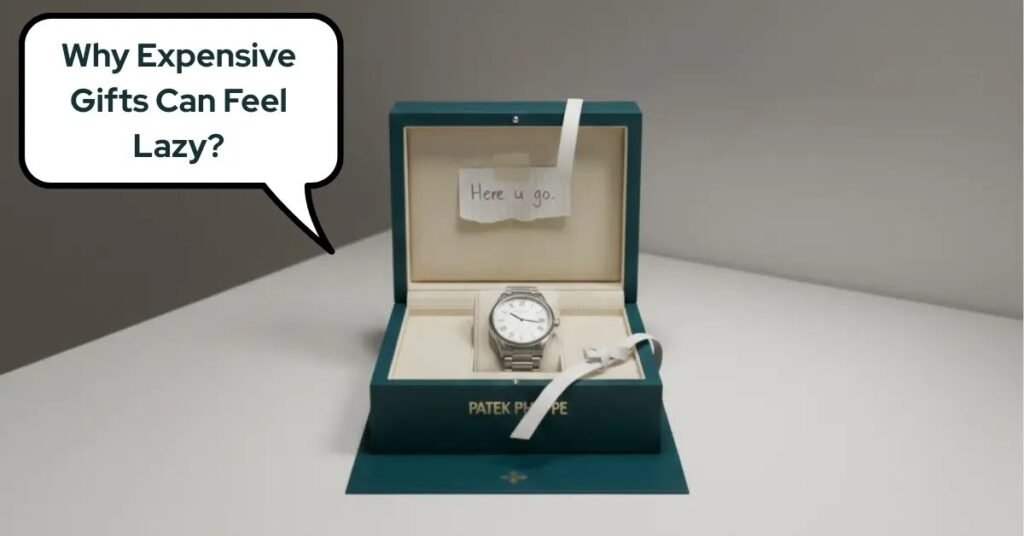
Expensive items, like luxury watches, designer handbags, or premium gadgets, may catch the eye, but they can still feel lazy if they lack thought, personalization, or genuine connection.
1. The Pitfall of Luxury Without Thought
High-end gifts often focus on brand, prestige, or aesthetics rather than the recipient’s personality or needs.
A $500 designer scarf may impress the giver, but it won’t resonate if the recipient doesn’t wear scarves or doesn’t connect with the item.
Ensure luxury gifts align with the recipient’s lifestyle and interests.
Even expensive items need a personal touch, like a handwritten note, thoughtful wrapping, or pairing.
2. Effort Trumps Price Every Time
A modest, well-thought-out gift often leaves a stronger impression than an extravagant, impersonal one.
Lazy expensive gifts can create disappointment because they signal obligation rather than genuine care.
Complement high-cost gifts with small, personalized elements that show you know and value the recipient.
3. Examples of Expensive But Emotionally Empty Gifts
- Designer items chosen solely for their brand
- High-tech gadgets are irrelevant to the recipient’s hobbies
- Premium gift baskets with generic items and no personalization
Psychological Reasons Behind Lazy Gift Giving
Understanding these reasons helps explain why thoughtful gifting sometimes fails.
Decision Fatigue and Mental Overload
For many people, this mental overload manifests as gift-giving anxiety.
With numerous options, varying budgets, personal preferences, and social expectations to consider, people often experience decision fatigue.
This often leads to defaulting to easy, generic, or last-minute gifts, which may appear lazy even without ill intent.
Cognitive overload occurs when the brain is overwhelmed by too many simultaneous decisions.
Combat decision fatigue by
- Planning gifts throughout the year
- Narrowing options to 2 – 3 meaningful choices
- Using curated or personalized gift services that save time.
Gift Languages and Misaligned Expectations
People express and receive love differently. Some value acts of service, others quality time, words of affirmation, or thoughtful gifts.
When a giver selects a present that aligns with their own “gift language” rather than the recipient’s, even well-intentioned gifts can feel lazy or disconnected.
Misalignment occurs when the giver shows care through convenience or practical items.
The recipient values personalization, creativity, or emotional resonance.
Understand the recipient’s preferences by:
- Observing their reactions to past gifts
- Noting what brings them joy throughout the year
- Asking subtle questions about likes, hobbies, or needs
Social Obligation vs Emotional Connection
Many gifts are given out of social obligation, holidays, birthdays, or cultural expectations, rather than a genuine desire to show care.
This forced approach can reduce sincerity and result in gifts that feel perfunctory or lazy.
Focus on small, intentional gestures that reinforce emotional connection rather than simply fulfilling duty.
Lazy Gift vs Thoughtful Gift
Below is a clear comparison to help you recognize and improve your own gift-giving approach.
| Criteria | Lazy Gift | Thoughtful Gift |
| Intent | Chosen out of obligation or convenience, with minimal effort. | Selected with genuine care, guided by the recipient’s preferences |
| Effort | Little planning, often last-minute | Involves research, anticipation, and thoughtful effort |
| Personalization | No customization or alignment with the recipient’s interests | Tailored to the person’s unique tastes |
| Emotional Impact | Feels impersonal, indifferent, | Evokes happiness, appreciation, and emotional connection |
How to Avoid Giving a Gift That Feels Lazy
The following principles show how to consistently practice thoughtful gifting that feels personal, sincere, and emotionally resonant.
Start by Listening
The most thoughtful gifts come from passive listening, not last-minute brainstorming. People reveal what matters to them all year.
When a gift reflects something the recipient mentioned weeks or months ago, it signals emotional presence.
Add One Personal Element That Signals Intent
One intentional detail, clearly visible to the recipient, often changes the entire emotional perception.
Personal details transform a gift from a transaction into a message.
Match the Gift to Their Actual Lifestyle
Many gifts feel lazy because they reflect fantasy gifting, who the giver imagines the recipient should be.
Lifestyle-aligned gifts feel respectful. They fit into the recipient’s routines, space, energy level, and priorities.
Give Yourself Time
Time pressure is the root cause of most lazy gifts.
Even a small buffer, one or two weeks, allows ideas to connect naturally and prevents defaulting to “safe” but impersonal options.
Rushed gifts feel rushed, no matter how nice they look.
Are Gift Cards or Cash Lazy Gifts?
The truth is more nuanced: gift cards and cash aren’t inherently lazy, but the way they’re given determines how they’re received.
When Gift Cards or Cash Feel Lazy
Gift cards or cash tend to feel lazy when they appear to be chosen as a shortcut.
This usually happens when there’s no context, explanation, or personalization attached.
Common scenarios include,
- A last-minute gift card with no note or explanation
- Cash was handed over without acknowledgment of the occasion
- Repeated use of gift cards for the same person every year
- Generic store cards unrelated to the recipient’s interests
It’s not the format that feels lazy; it’s the absence of emotional intent.
When Gift Cards or Cash Are Actually Thoughtful
In many cases, gift cards or cash are the most respectful option, especially when they align with the recipient’s lifestyle, preferences, or current needs.
Thoughtful scenarios include,
- A gift card to a brand, café, or store that the person genuinely loves
- Cash given with a clear purpose (travel fund, personal goal, emergency support)
- Situations where choice and flexibility are more valuable than an object
- Cultural contexts where cash gifting is traditional and appreciated
Choice can be a form of care when it’s given consciously.
FAQs
1. What makes a gift feel lazy?
A gift feels lazy when it lacks thought, personalization, or emotional intent. Common signs include generic items, last-minute purchases, ignoring the recipient’s preferences, or minimal presentation.
2. Can an expensive gift still feel lazy?
Yes, even costly gifts can feel lazy if they’re impersonal or poorly aligned with the recipient. Luxury items chosen without understanding someone’s tastes or lifestyle often feel emotionally empty.
3. Are last-minute gifts always considered lazy?
Not always, but they often are. A last-minute gift can still feel thoughtful if it’s clearly customized to the recipient. However, rushed decisions frequently lead to generic or obligation-driven gifts.
4. Why do lazy gifts hurt feelings?
Lazy gifts can make recipients feel unseen or unimportant. They signal a lack of emotional investment, which can create disappointment, resentment, or emotional distance.
5. Are gift cards or cash considered lazy gifts?
Gift cards and cash are not inherently lazy. They feel lazy only when given without context or intention. When aligned with the recipient’s preferences and accompanied by a thoughtful note, they can be very meaningful.
6. How can I tell if my gift feels thoughtful or lazy?
If you’re stuck in a cycle of wondering, Will they like the gift, these questions help shift your focus back to intention.
- Does this reflect something specific about them?
- Did I put time or attention into choosing it?
- Does it communicate care beyond obligation?
If the answer is “yes” to most, it’s likely thoughtful.
7. Is it okay to give practical gifts, or do they feel lazy?
Practical gifts are not lazy when they solve a real need or fit naturally into someone’s life. In fact, lifestyle-aligned practical gifts often feel more thoughtful.
Conclusion
What makes a gift feel lazy has very little to do with money and everything to do with attention.
A gift feels lazy when it lacks intention, ignores personal preferences, or is given out of obligation rather than emotional connection.
Generic items, rushed purchases, and minimal effort don’t fail because they’re simple; they fail because they don’t make the recipient feel seen.
By listening throughout the year, matching gifts to real lifestyles, adding even one personal detail, and allowing yourself a little time to choose with care, any gift can feel meaningful.
When gifting becomes an expression of presence rather than pressure, it strengthens relationships, builds trust, and turns even small gestures into lasting emotional connections.
Gift Me What – Where Every Gift Finds Its Perfect Match!